Full Refurbishing
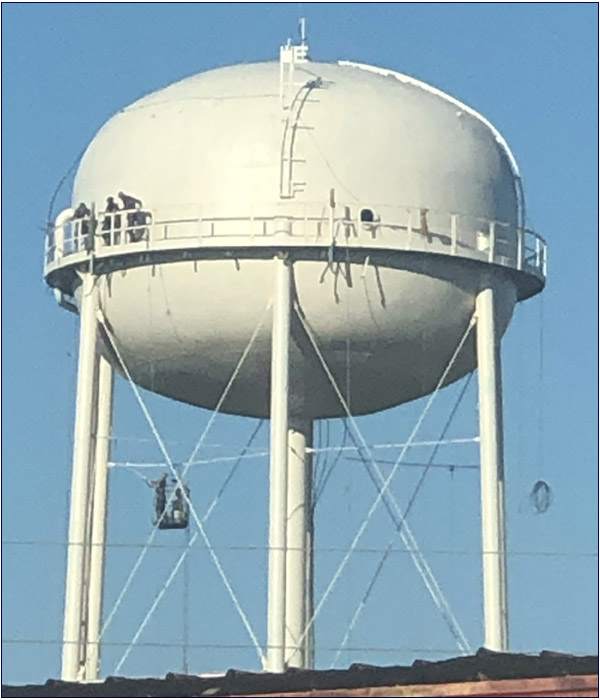
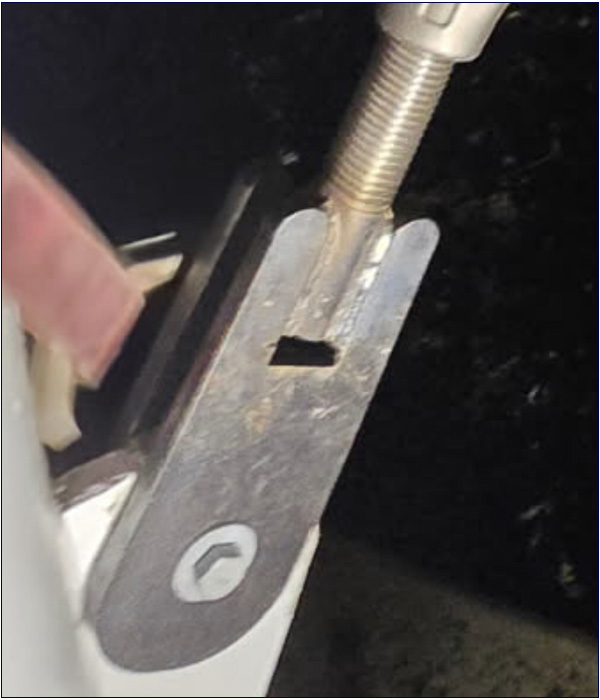
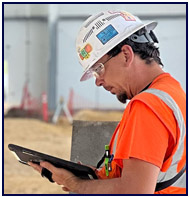
Asher Industrial Maintenance provides expert refurbishing of all water towers. The full refurbishment of a water tower involves a comprehensive surface restoration and protective coating process to extend the structure’s service life and ensure long-term performance. All existing paint and coatings are completely removed through abrasive grit blasting to the national SSPC-SP 10 / NACE No. 2 standard (The official standard for Near-White Metal Blast Cleaning) This is a rigorous surface preparation process removing almost all rust, scale, and old paint, allowing only minimal, light staining (max 5%) for superior coating adhesion, achieved by slow, overlapping nozzle passes with abrasive media like steel grit, creating a textured "anchor profile" for the new finish. This process provides a clean, properly profiled surface necessary for optimal coating adhesion. Following thorough inspection and surface preparation, the tower is repainted with a high-performance, corrosion-resistant coating system designed to withstand harsh environmental conditions. The refurbishment also restores the tower’s structural integrity by tightening yokes and welding repairs. In many cases new manways are welded into place and railings are replaced or modified to meet current codes. Finally, all safety equipment is usually replaced with newer safer models for fall protection.
_________________________________________________________________________________________________________________________________________________
Blasting & Coating
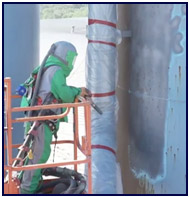
Performing a high-quality grit blasting and recoating of an elevated water tank is critical to ensuring the structure’s long-term durability, safety, and reliability. Proper grit blasting completely removes failing coatings, corrosion, and contaminants, creating a clean, well-profiled surface that allows new coatings to bond effectively. When this preparation is done correctly, the recoating system can perform as designed, protecting the steel from moisture, chemicals, and environmental exposure that lead to premature deterioration. A quality job also helps prevent costly future repairs, reduces the risk of structural damage, and ensures continued compliance with regulatory and public safety standards, ultimately extending the service life of the water tank and safeguarding the community’s water infrastructure. Ascher Industrial Maintenance has expert crews that have years of experience blasting and coating tanks the right way, with extreme precision.
_________________________________________________________________________________________________________________________________________________
Pressure Washing
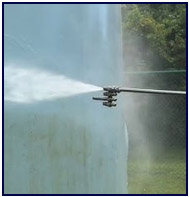
The process of pressure washing and silt removal in a potable water tank is a critical step to ensure water quality and public health before the tank is returned to service. After the tank is drained and properly ventilated, high-pressure washing is used to remove accumulated sediment, biofilm, and loose debris from the interior surfaces, including the floor, walls, and structural components. Collected silt and residue are carefully removed and disposed of in accordance with environmental and regulatory requirements. Once cleaning is complete, the tank is thoroughly rinsed and inspected to verify that all contaminants have been eliminated, ensuring the interior surfaces are clean and suitable for potable water before the tank is refilled and placed back into operation.
_________________________________________________________________________________________________________________________________________________
Steel Fab & Welding Repairs
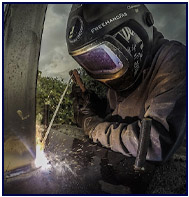
Quality welding repairs are essential to maintaining the structural integrity, safety, and longevity of steel structures. Properly executed welds restore strength to damaged or deteriorated components, ensuring that loads are safely transferred and the structure performs as originally designed. High-quality welding also minimizes the risk of cracks, corrosion, and premature failure by providing sound, continuous joints that resist environmental and mechanical stresses. Adhering to approved welding procedures, industry standards, and thorough inspection requirements helps prevent costly rework and potential safety hazards, ultimately extending the service life of the structure and protecting both personnel and assets. Ascher Industrial Maintenance has expert welders and top quality steel fabricators that are a perfect fit for all of your steel repair needs.
_________________________________________________________________________________________________________________________________________________
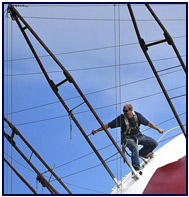
Yearly Maintenance
Ascher Industrial Maintenance offers the most comprehensive maintenance programs in the industry. Yearly maintenance of an elevated water tank follows a systematic process designed to preserve structural integrity, protect water quality, and extend the service life of the asset. The process typically includes the following steps:
1. Visual Inspection – Conduct a detailed exterior and interior inspection of the tank, roof, shell, support structure, ladders, platforms, and safety systems to identify corrosion, coating failure, leaks, or structural concerns.
2. Coating and Corrosion Assessment – Evaluate the condition of interior and exterior coatings, noting areas of peeling, blistering, rust, or exposure of bare steel that may require touch-up or future rehabilitation.
3. Welding and Structural Review – Inspect welds, connections, and critical structural components for cracks, deformation, or fatigue, addressing any deficiencies with qualified welding repairs as needed.
4. Cleaning and Sediment Monitoring – Check for sediment buildup or biological growth in the interior of the tank and perform cleaning or silt removal if necessary to maintain potable water quality.
5. Appurtenance Maintenance – Inspect and service valves, vents, hatches, overflow systems, level indicators, cathodic protection systems, and safety equipment to ensure proper operation and compliance.
6. Pressure Washing and Minor Repairs – Pressure wash exterior surfaces as needed and complete minor repairs such as sealant replacement, bolt tightening, and spot coating repairs.
7. Documentation and Reporting – Record findings, photographs, and measurements, and prepare a maintenance report outlining current conditions, completed work, and recommendations for future repairs or capital improvements. This annual maintenance process helps prevent unexpected failures, reduces long-term repair costs, and ensures the continued safe operation of the elevated water tank.
_________________________________________________________________________________________________________________________________________________
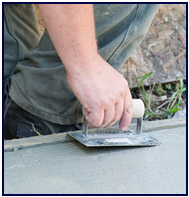
Concrete Repairs
Ascher Industrial Maintenance has years of experience repairing concrete pads. Concrete repairs for pads supporting steel structures, such as elevated water towers, follow a structured process to restore load-bearing capacity, durability, and long-term performance. The typical repair process includes the following steps:
1. Assessment and Evaluation – Perform a detailed inspection of the concrete pad to identify cracking, spalling, scaling, settlement, exposed reinforcement, or signs of corrosion. Determine the extent of damage and underlying causes such as water intrusion, freeze-thaw cycles, or overloading.
2. Surface Preparation – Remove all unsound or deteriorated concrete using chipping hammers, saw cutting, or hydro-demolition to reach solid, intact material. Clean exposed reinforcement of rust and contaminants, and ensure proper edge definition for effective bonding.
3. Reinforcement Treatment – Inspect exposed reinforcing steel for section loss and repair or replace as necessary. Apply corrosion-inhibiting primers or protective coatings to the reinforcement to prevent future deterioration.
4. Forming and Bonding – Install formwork as required to restore the original pad geometry. Apply a bonding agent or epoxy to prepared surfaces to ensure proper adhesion between existing concrete and repair materials.
5. Concrete Placement – Place approved repair mortar or concrete designed for structural applications, ensuring proper consolidation and alignment with anchor bolts, base plates, or embedded components supporting the steel structure.
6. Finishing and Curing – Finish the repaired surface to the required profile and texture, then cure the concrete according to manufacturer and industry standards to achieve the intended strength and durability.
7. Sealing and Protection – Apply sealers, coatings, or joint materials as specified to protect the concrete from moisture, chemicals, and environmental exposure.
8. Final Inspection and Documentation – Conduct a final inspection to confirm the repair meets design requirements and tolerances, and document the work completed for maintenance records and future inspections. Following this process ensures the concrete pad can safely support the steel structure and perform reliably over its intended service life.
_________________________________________________________________________________________________________________________________________________
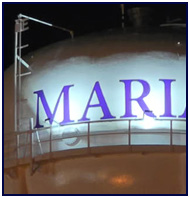
Tank Lighting
Let Ascher Industrial Maintenance light up your water tower. Get some extra publicity and notoriety for your county or city. The process of running electrical service and installing LED lighting to illuminate the logo on the side of an elevated water tank must be carefully planned and executed to ensure safety, durability, and full compliance with applicable building and electrical codes. The typical process includes the following steps:
1. Design and Code Review – Develop a lighting and electrical design that defines fixture type, wattage, beam spread, mounting locations, and control systems. Review the design for compliance with the National Electrical Code (NEC), local building codes, wind-load requirements, and owner specifications.
2. Permitting and Coordination – Obtain all required electrical and building permits and coordinate work with the owner, utility provider, and inspection authorities. Establish lockout/tagout and safety procedures for work at height.
3. Power Source and Routing – Identify and verify the power source, then route conduit from the service panel to the tank using approved, weather-resistant conduit and fittings. All conduit is securely fastened and protected against mechanical damage, corrosion, and environmental exposure.
4. Wiring Installation – Pull appropriately rated conductors through conduit, sized according to load calculations and voltage drop requirements. All wiring is grounded and bonded in accordance with NEC standards to ensure electrical safety.
5. Fixture Mounting – Install LED lighting fixtures using engineered mounting brackets or supports designed to withstand wind, vibration, and structural movement without compromising the tank coating or structure.
6. Connections and Sealing – Make all electrical terminations using listed connectors and enclosures. Seal penetrations and junction boxes to maintain weatherproofing and prevent moisture intrusion.
7. Testing and Aiming – Energize the system and test all circuits, controls, and fixtures. Adjust fixture aim and light distribution to evenly illuminate the logo while minimizing glare, light spill, and energy consumption.
8. Inspection and Approval – Complete required electrical and building inspections to verify code compliance. Address any deficiencies identified by inspectors.
9. Documentation and Training – Provide as-built drawings, load calculations, and maintenance documentation, and review system operation and maintenance requirements with the owner. Following this process ensures the LED lighting system is safely installed, code-compliant, energy-efficient, and effective in highlighting the water tank logo.
_________________________________________________________________________________________________________________________________________________